Restorative Dentistry
Same-Day Dentures: What Is Actually Possible in One Day
Walking out with teeth on the day they come out is real, and it is not the whole story. Here is what happens in the first day, the first month, and the first year.
By Dr. Prabha Raju, DDS · November 19, 2026 · 6 min read
If you are facing losing a set of teeth, the question that matters more than any other is usually whether you are going to be seen in public without them. The answer is no, and the way that works is worth understanding properly, because the phrase same-day dentures promises something slightly different from what it delivers.
What same-day actually means
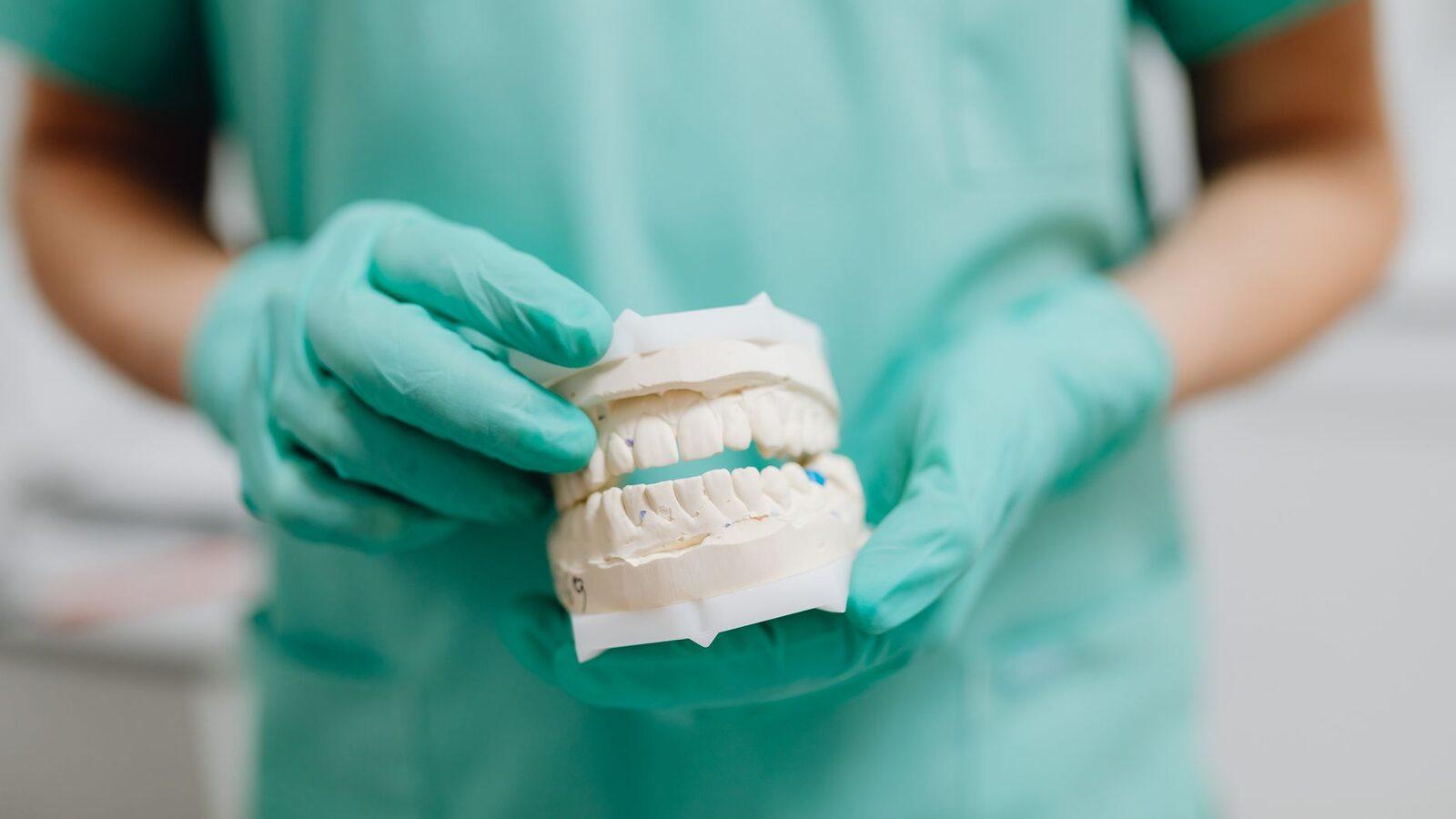
The proper name is an immediate denture. The work is done before the extractions rather than after. We take impressions and measurements while your teeth are still in place, the denture is made from those, and on the day of surgery the teeth come out and the denture goes straight in.
So you never leave without teeth, and nobody has to see you between the two stages. That part of the promise is completely real.
The part people are not told
A denture rests on your gum and the bone underneath it, and both of those change shape after extractions. Over the first three to six months the gum settles and the bone remodels, which means the denture that fit perfectly on day one gradually becomes loose.
This is normal and expected, and it is not a sign that anything went wrong. It is why an immediate denture is usually treated as the first stage rather than the final answer. Once healing has settled, the denture is either relined to match the new shape or a permanent set is made.
Anyone who tells you an immediate denture is a one-and-done solution is either misinformed or hoping you do not come back to complain.
A realistic timeline
- Before surgery: impressions, measurements and shade matching, so the denture is ready in advance.
- Day of surgery: the teeth are removed and the denture is fitted immediately. You go home with teeth.
- First week: swelling and soreness, a soft diet, and a follow-up to adjust any sore spots.
- First three months: the gums settle. Expect the fit to loosen and expect one or two adjustments.
- Three to six months: a reline to match the healed shape, or a permanent denture made to fit it.
- Afterwards: a check once a year. Bone keeps changing slowly for life, so relines every few years are normal.
Full, partial, and the one most people need
A full denture replaces every tooth in an arch. A partial fills the gaps around teeth that are still healthy and worth keeping, and clips onto them for support.
People often assume they need a full set when they do not. If several of your own teeth are sound, keeping them is almost always the better decision, because natural tooth roots preserve the bone underneath and a partial is more stable than a full denture can ever be. We would rather save four good teeth than take them out for the sake of a tidier plan.
Why lower dentures are harder
An upper denture covers the palate, which gives it a large surface to hold onto, and most people manage well with one. A lower denture is a horseshoe sitting on a narrow ridge with a tongue moving underneath it, and it has far less to grip.
That is why most complaints about dentures are about lower ones. If you have had a lower denture that never felt secure, the problem was probably not you and probably not the denture. It is the anatomy.
Two to four implants change that completely. The denture clips onto them and stays put while you eat, which for many people is the difference between wearing it and leaving it in a drawer. If you are going to end up there eventually, it is worth asking about it at the start rather than after you have paid for a denture twice.
What it costs
The price depends on whether you need a partial or a full set, one arch or two, the materials, and whether extractions are involved. Rather than quote a range that will not apply to you, we give you a written figure after an examination, with your insurance already checked.
Adult dental benefits under Michigan Medicaid and the Healthy Michigan Plan do include dentures, subject to the plan's rules and how often a replacement is allowed. We accept Medicaid and Medicare along with most PPO plans and we file the claim for you. CareCredit and payment plans are available for whatever is left.
If you are nervous about the extractions
Most people are, and it is usually the extractions rather than the dentures that keep them from calling. Dr. Raju is trained in conscious sedation through DOCS, so this can be done with you comfortably sedated rather than counting the minutes.
To talk it through with no obligation, call (810) 715-3368 or request an appointment online. We are at 1024 N. Genesee Rd in Burton, with free parking at the door, and we see patients from Burton, Flint, Davison, Grand Blanc and across Genesee County.
Questions patients ask us
Yes. These are called immediate dentures. They are made in advance from impressions taken before the extractions, so they are ready to fit the moment the teeth come out. You do not go without teeth.
They will fit the mouth you had before surgery. As the gums heal and shrink over the following months the fit loosens, which is expected and is why a reline or a permanent set follows later.
It depends on whether you need a partial or a full set, one arch or both, and the materials. Bring your insurance card and we will give you a written figure before anything is booked.
Adult dental benefits including dentures are covered under Michigan Medicaid and the Healthy Michigan Plan, subject to the plan's own rules and frequency limits. Call us with your card and we will check what yours allows.
Yes, and for lower dentures in particular it makes a large difference. Two to four implants can hold a denture firmly in place so it does not lift when you eat or talk.
Have a question about your smile? Ask a Burton dentist who listens.
Tender Dental Care welcomes new patients from Burton, Flint, Grand Blanc, Davison and all of Genesee County. Request a visit online or call and a real person will answer during office hours.

About the author
Dr. Prabha Raju, DDS
Dr. Raju has practiced dentistry in Burton, Michigan since 1997, with advanced training in implants, sedation, laser dentistry and Invisalign.
Meet Dr. Raju →She has written about this before
- CAD/CAM Complete DenturesMy City Magazine, 2016
Tender Dental Care, 1024 N. Genesee Rd, Burton, MI 48509. Serving Flint, Grand Blanc, Davison, Flushing, Swartz Creek, Fenton and Genesee County. This article is general information, not a diagnosis; please see a dentist for advice about your own mouth.